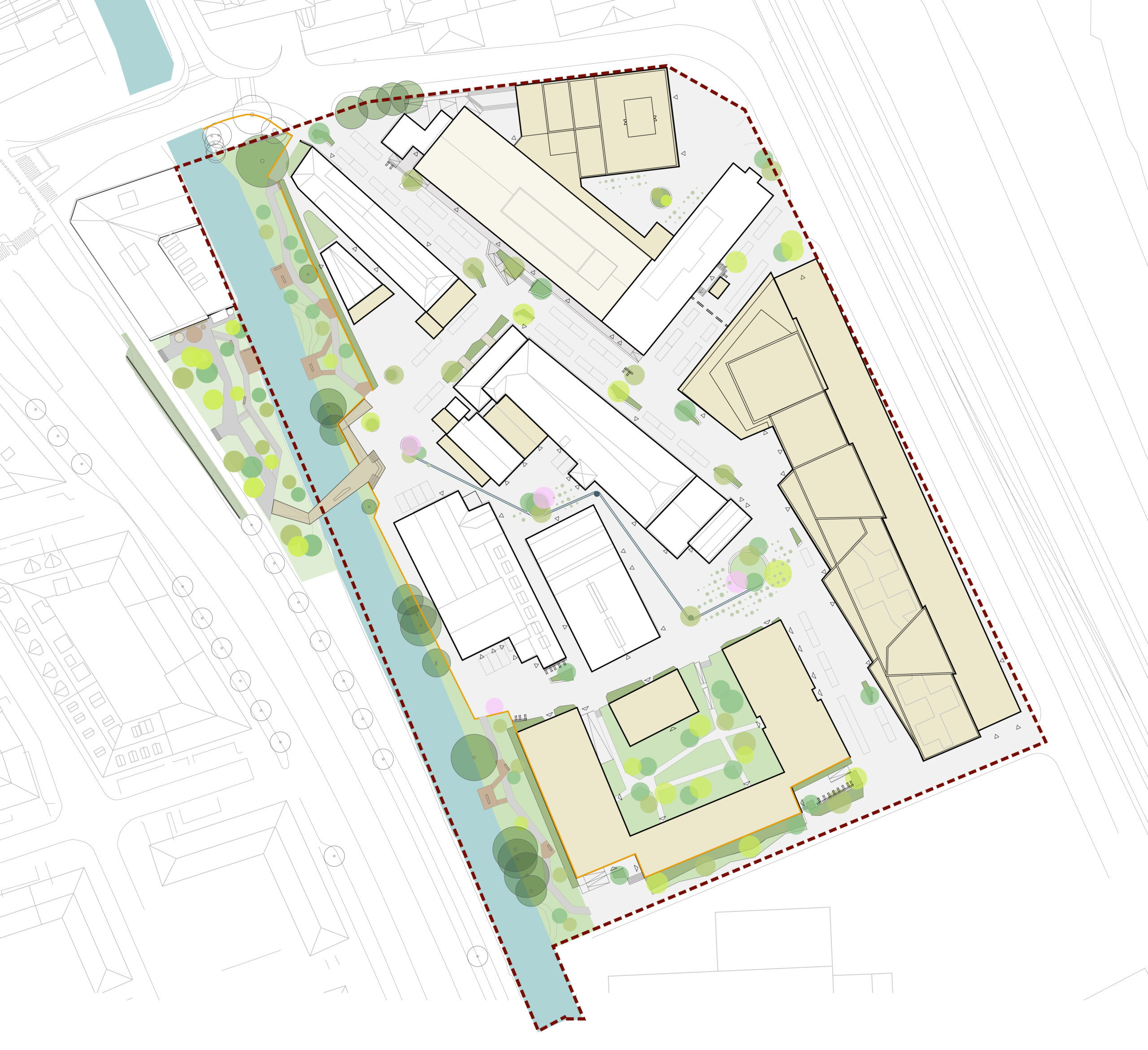
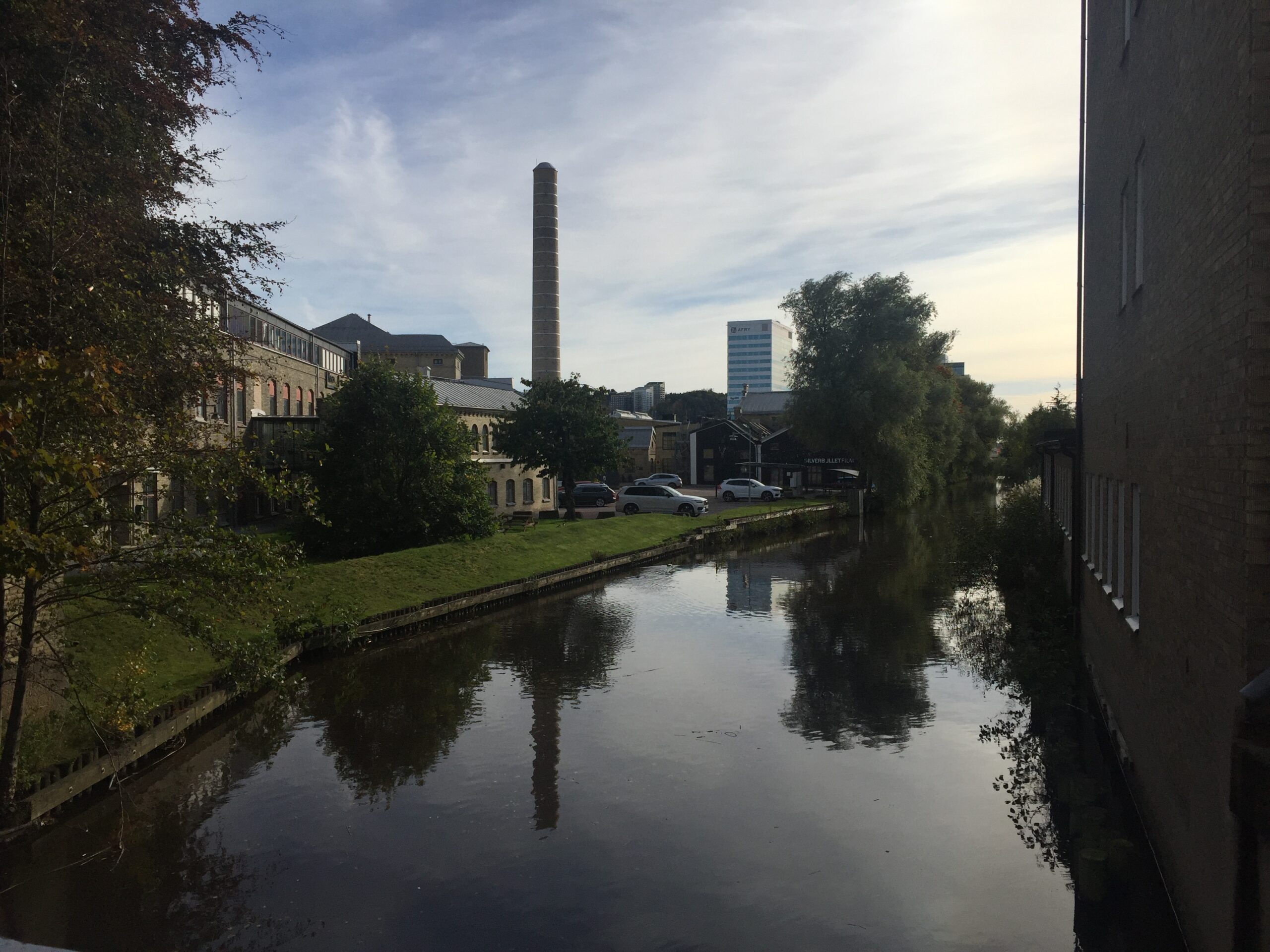
Almedals fabriker is a historic industrial area located in Krokslätt, Gothenburg, along Mölndalsån. Today, the area hosts a variety of different businesses, primarily office spaces.
The area is facing a planned densification with new office and residential buildings. In connection with this, green spaces and recreational paths will also be created. Platzer, Svenska Hus, and Wallenstam are the property owners who intend to develop the area. The process of preparing materials for the detailed development plan is being driven by the developers.
MARELD has been tasked with creating a design proposal along with a cost assessment for public spaces, parks, and streetscapes in the area. The developed materials are intended to serve as a basis for progress in the ongoing detailed planning process. MARELD has investigated and tested the space requirements needed to accommodate an ecological edge zone, a recreational park path, and the potential to create qualities of parks close to residential areas.
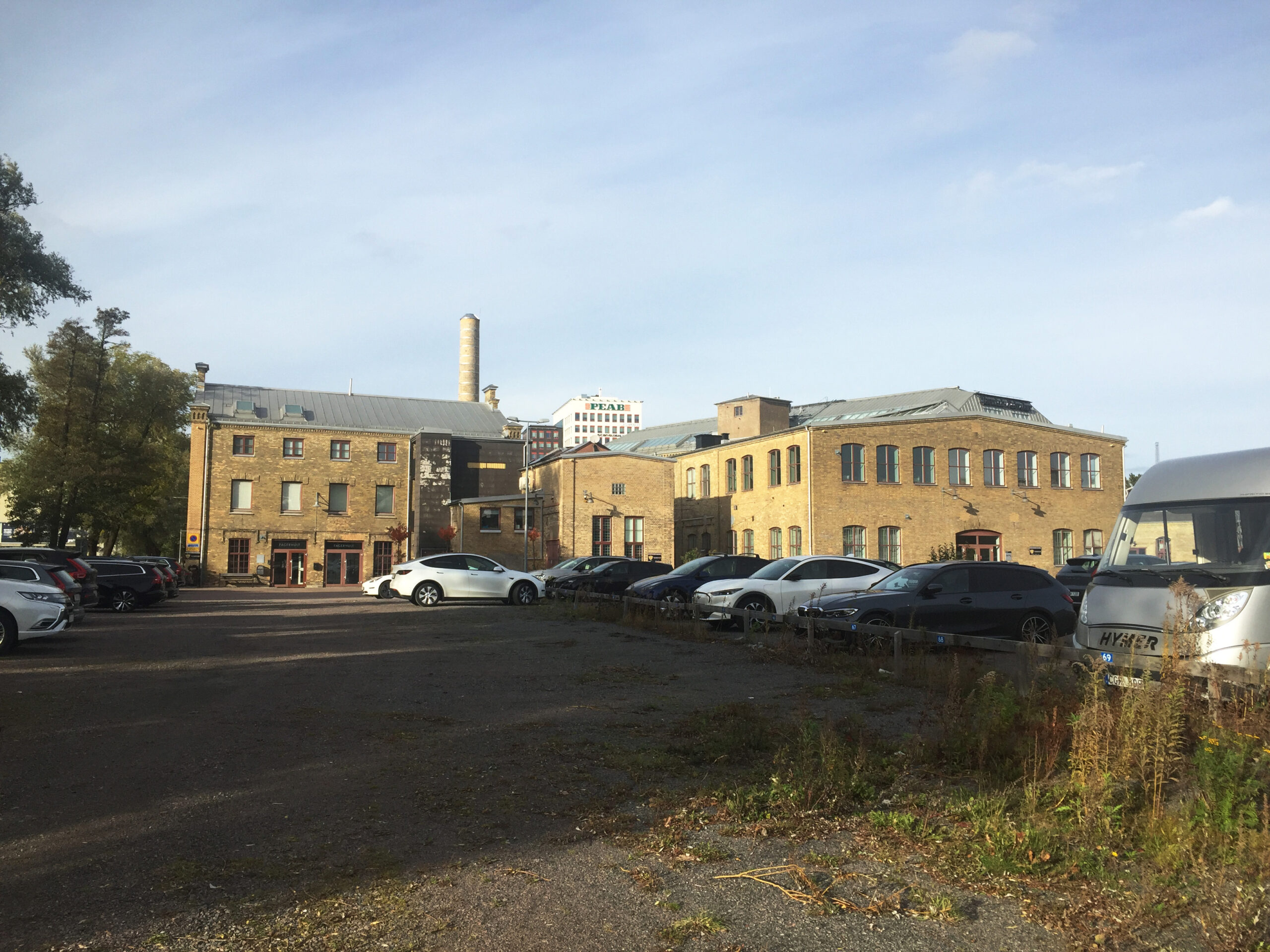
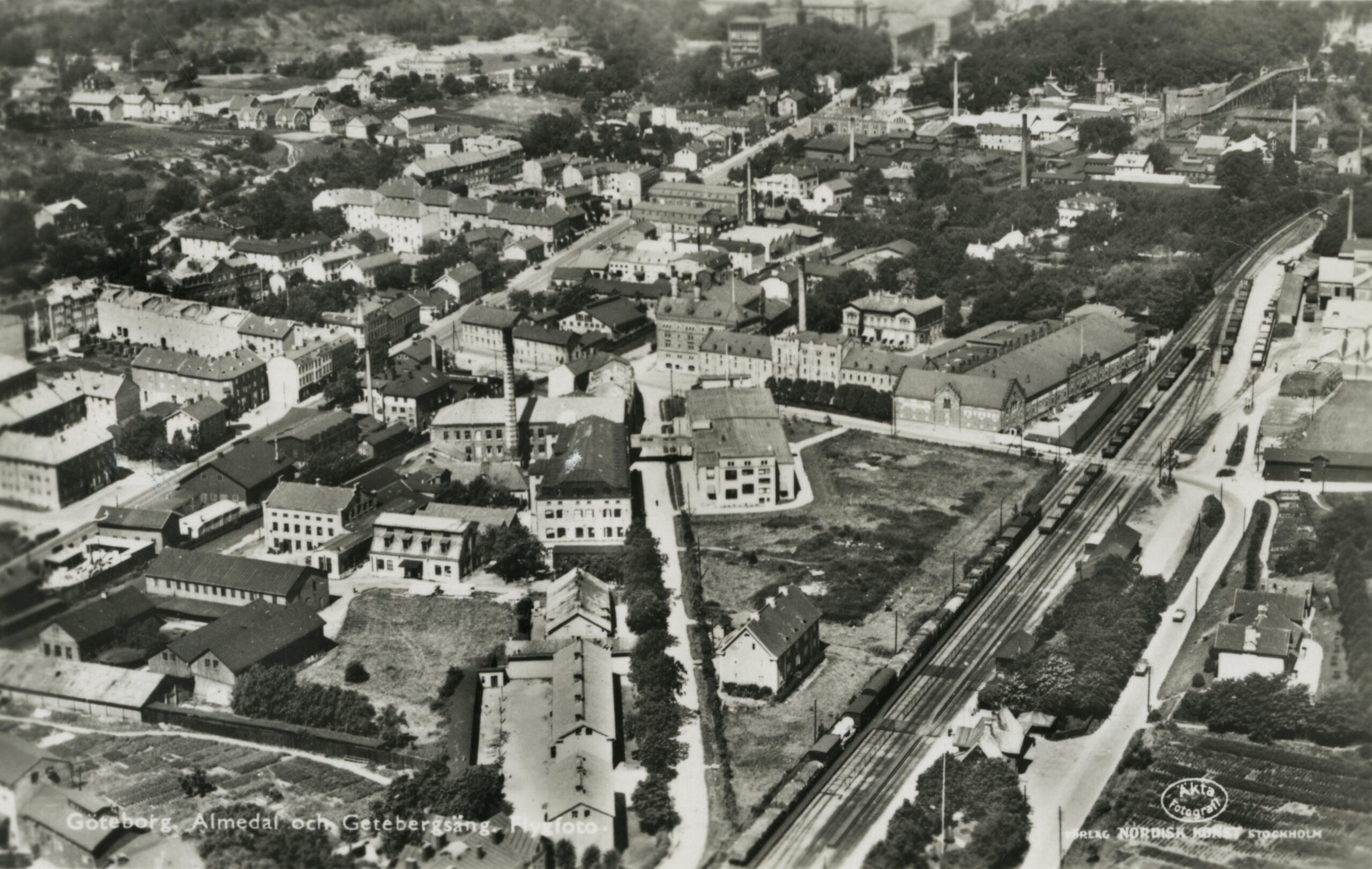
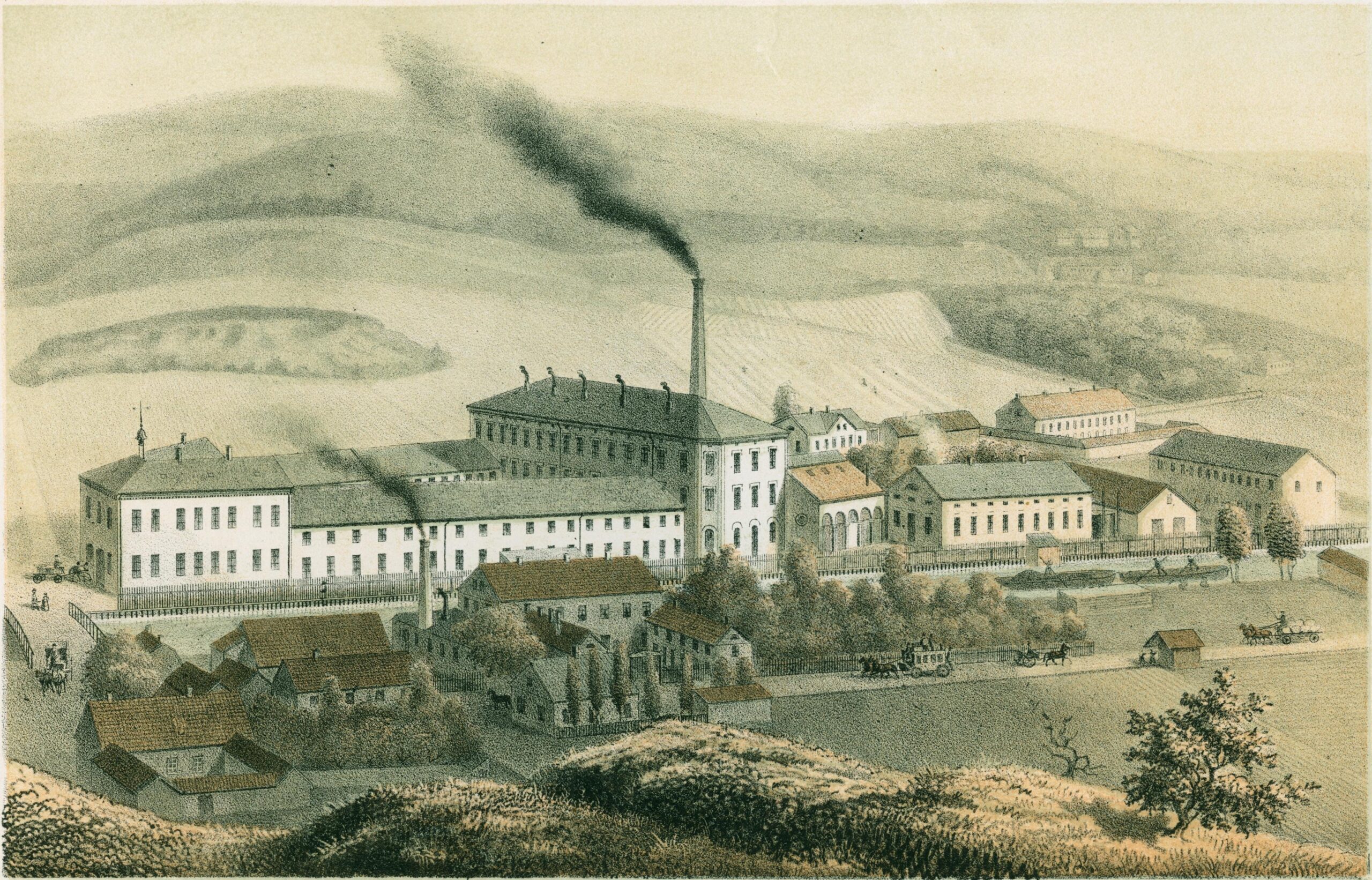
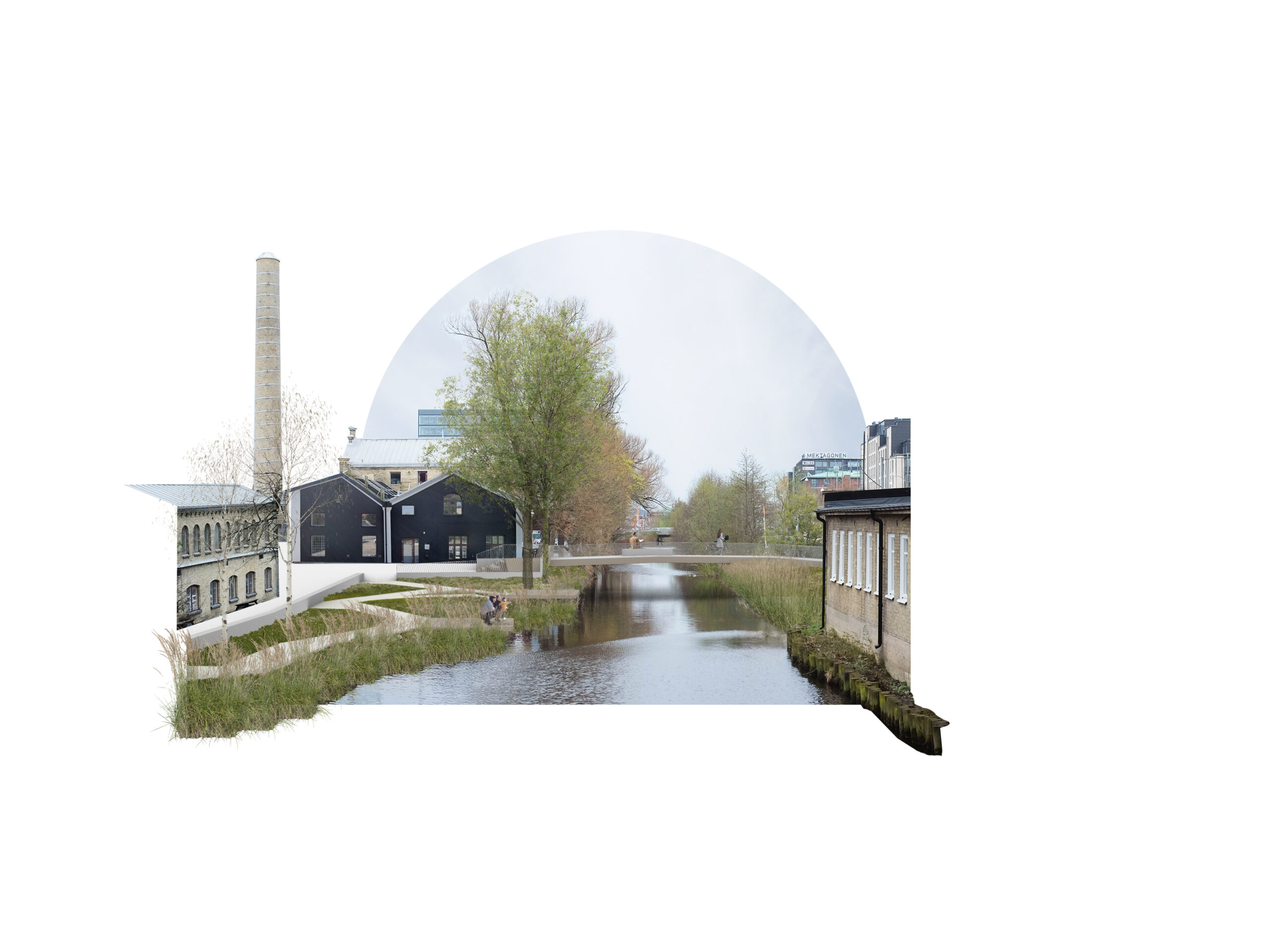
In connection with the development of a detailed plan, a new pedestrian bridge, an ecological buffer zone with erosion protection, and flood protection are planned over and along the Mölndalsån River. These measures require a permit for water-related activities, which is why a permit application process has been initiated.
As part of the permit application, MARELD has been tasked with refining the parts of the design proposal previously developed into a detailed proposal document concerning the bridge, ecological buffer zone, and flood protection with erosion control. This is to anchor the proposal with the City of Gothenburg and developers, as well as to provide a basis for the preliminary design, which will serve as the foundation for the water activity permit application.
The area is complex, with many older buildings, structures, and utility systems. There are challenges related to geotechnics, high water levels in the Mölndalsån River, heavy rainfall, soil contamination, and noise. Design proposals have been developed for public spaces, parks, and streetscapes, with all parts thoroughly worked through to function together as a whole.
The major design challenge in the project has been to design and position a flood protection system that respects the cultural heritage buildings while also creating the largest and most high-quality green areas possible. The low-lying land has also required efforts to avoid the protection being perceived as a high wall.